









My NTS
Live now

Franz Liszt

Franz Liszt

Franz Liszt has been played on NTS over 40 times, featured on 41 episodes and was first played on 27 November 2014.

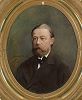
Franz Liszt (22 October 1811 – 31 July 1886) was a Hungarian composer, virtuoso pianist, conductor, and teacher of the Romantic period. With a career spanning over six decades, he produced a substantial and varied body of work and is considered one of the most prolific and influential composers of his time. His piano compositions remain widely performed and recorded.

Liszt began his career as a concert pianist at a young age, studying under Carl Czerny and Antonio Salieri. He achieved widespread fame during his tours across Europe in the 1830s and 1840s, becoming renowned for his extraordinary technical skill and charismatic stage presence. His popularity gave rise to the term "Lisztomania," describing the intense public enthusiasm he generated, which surpassed that of earlier virtuoso performers.

Throughout his life, Liszt maintained friendships with and supported many composers of his era, including Hector Berlioz, Frédéric Chopin, Robert Schumann, Clara Schumann, and Richard Wagner. He helped promote their music through performances and adaptations. He introduced the terms "transcription" and "paraphrase" to describe his arrangements of works by other composers, which he often performed to bring their music to wider audiences. He was also closely associated with the New German School, a group of progressive composers advocating for programmatic music and advanced harmonic techniques, and was a key figure in the so-called "War of the Romantics."

Liszt was a dedicated teacher, instructing hundreds of piano students, many of whom went on to become successful musicians. He is credited with introducing the concept of the masterclass as a formal method of teaching. His compositions had a lasting influence on his contemporaries and anticipated developments in modern music. Notable contributions include the creation of the symphonic poem, the use of thematic transformation, and early forms of musical Impressionism. In his later years, Liszt experimented with atonality, foreshadowing elements of 20th-century classical music.

He is best remembered for his original piano works, including the "Hungarian Rhapsodies," "Années de pèlerinage," "Transcendental Études," "La campanella," and the "Piano Sonata in B minor."

read more

Franz Liszt

Franz Liszt has been played on NTS over 40 times, featured on 41 episodes and was first played on 27 November 2014.

Franz Liszt (22 October 1811 – 31 July 1886) was a Hungarian composer, virtuoso pianist, conductor, and teacher of the Romantic period. With a career spanning over six decades, he produced a substantial and varied body of work and is considered one of the most prolific and influential composers of his time. His piano compositions remain widely performed and recorded.

Liszt began his career as a concert pianist at a young age, studying under Carl Czerny and Antonio Salieri. He achieved widespread fame during his tours across Europe in the 1830s and 1840s, becoming renowned for his extraordinary technical skill and charismatic stage presence. His popularity gave rise to the term "Lisztomania," describing the intense public enthusiasm he generated, which surpassed that of earlier virtuoso performers.

Throughout his life, Liszt maintained friendships with and supported many composers of his era, including Hector Berlioz, Frédéric Chopin, Robert Schumann, Clara Schumann, and Richard Wagner. He helped promote their music through performances and adaptations. He introduced the terms "transcription" and "paraphrase" to describe his arrangements of works by other composers, which he often performed to bring their music to wider audiences. He was also closely associated with the New German School, a group of progressive composers advocating for programmatic music and advanced harmonic techniques, and was a key figure in the so-called "War of the Romantics."

Liszt was a dedicated teacher, instructing hundreds of piano students, many of whom went on to become successful musicians. He is credited with introducing the concept of the masterclass as a formal method of teaching. His compositions had a lasting influence on his contemporaries and anticipated developments in modern music. Notable contributions include the creation of the symphonic poem, the use of thematic transformation, and early forms of musical Impressionism. In his later years, Liszt experimented with atonality, foreshadowing elements of 20th-century classical music.

He is best remembered for his original piano works, including the "Hungarian Rhapsodies," "Années de pèlerinage," "Transcendental Études," "La campanella," and the "Piano Sonata in B minor."

Original source: Last.fm

Tracks featured on

Most played tracks

Sonata (Dialogo E Capriccio) For Cello
Ligeti, Farkas, Veress, Liszt, Dohnányi, Weiner, Mihály, Miklós Perényi, Dénes Várjon
Hungaroton Classic1999
Nocturne In E Flat Major, Op. 9 No. 2
Solomon, Beethoven, Bliss, Brahms, Chopin, Liszt
His Master's Voice1972
La Lugubre Gondola
Franz Liszt, Reinbert de Leeuw, Vera Beths, Anner Bylsma
Philips1984
Totentanz Paraphrase Sur Le "Dies Irae" Pour Piano Et Orchestre
Liszt, Cziffra, Gyorgy Cziffra Junior, Orchestre De Paris
La Voix De Son Maître0
Wanderer-Fantasie
Liszt, Jorge Bolet
Decca2001
Consolation No. 3, S. 172. Lento Placido
Franz Liszt
Sony Classical1991
Un Sospiro
Chopin, Liszt, Van Cliburn
RCA Victor0
R. W.-Venezia
Franz Liszt, Maurizio Pollini
Deutsche Grammophon1990
Bagatelles Et Impromptus
Miroslav Sekera, Smetana, Liszt
Supraphon2020
Romance In F-Sharp, Op. 28
Artur Rubinstein, Alfred Wallenstein, Grieg, Falla, Liszt, Schumann, Prokofieff, Villa-Lobos
RCA Victor Red Seal1962